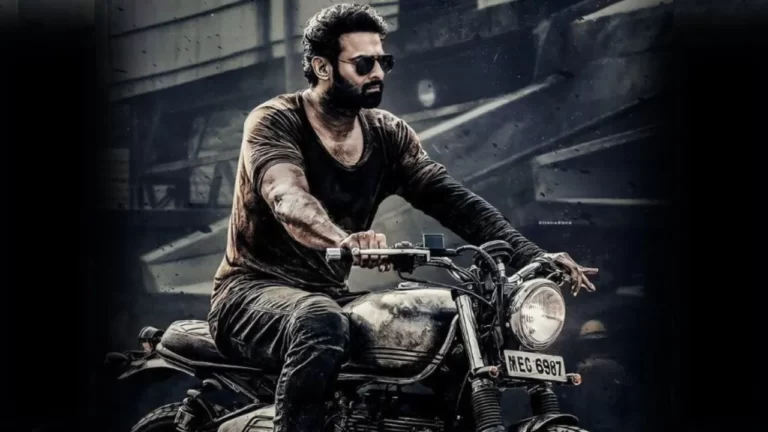
Ramayana Movie Review: Mind-Blowing Visual Spectacle! Jatayu vs Ravana Steals the Show – A Must-Watch Epic
Some films entertain you, some leave you emotional, and some make you feel that you have witnessed something truly extraordinary. Ramayana is one such cinematic experience.
I watched Ramayana, and honestly, I was blown away!
Directed by Nitesh Tiwari and produced by Namit Malhotra, this ambitious adaptation of the timeless Indian epic brings one of the world’s greatest stories to the big screen with an extraordinary cinematic vision.
The Ramayana is not an unfamiliar story for Indian audiences. We have grown up listening to it from our grandparents, reading different versions, and watching legendary television adaptations such as Ramanand Sagar’s Ramayan and Devon Ke Dev…Mahadev.
We already know Rama, Sita, Lakshman, Hanuman and Ravana. We know their journeys, their struggles and the values they represent.
So, the biggest question for me was: Can a new cinematic adaptation make us experience this familiar story differently?
My answer is a big YES!
And if I have to pick one sequence that completely stole my heart, it would undoubtedly be Jatayu vs Ravana.
Let’s talk about why this movie deserves to be experienced on the biggest screen possible.
Ranbir Kapoor as Lord Ram: A Performance That Carries the Weight of an Icon
Playing Lord Ram is not an ordinary acting assignment. It comes with enormous expectations because generations of Indians have their own image of Maryada Purushottam Shri Ram.
Ranbir Kapoor takes on this responsibility, and his portrayal is one of the central attractions of the film.
What makes the character important is not simply his strength or royal identity. Ram represents patience, compassion, responsibility, righteousness and the ability to put duty above personal happiness.
Ranbir’s performance brings the character into the cinematic world while respecting the larger significance of the role.
For an actor stepping into a character that millions already know and love, this is a huge responsibility.
His portrayal gives audiences another opportunity to connect with the personality and values of Lord Ram.
Sai Pallavi as Sita: Grace, Strength and Dignity
Sita is much more than a character in the Ramayana. She represents courage, dignity, patience and inner strength.
Sai Pallavi is a wonderful choice for this important role.
Her screen presence brings a sense of grace to Sita, and the character requires an emotional depth that goes beyond simply looking beautiful in a mythological setting.
Sita’s journey is one of the most emotionally significant parts of the Ramayana. Her relationship with Ram, her dignity and her strength are essential to the story.
Sai Pallavi brings her own interpretation to this iconic character, making her an important part of the film’s emotional foundation.
Ravi Dubey as Lakshman: The Brother Who Stands Beside Ram
Lakshman is one of the most emotionally important characters in the Ramayana.
His devotion to Ram is not merely about being a younger brother. He willingly leaves behind the comforts of royal life to accompany Ram into exile.
He is protective, courageous, loyal and sometimes outspoken when situations demand it.
Ravi Dubey takes on this challenging role, bringing another familiar character to life for audiences.
One of the things that makes Lakshman so interesting is his personality. He is not simply following Ram everywhere; he has his own emotions, opinions and sense of responsibility.
His presence adds strength to the relationship between the brothers, which is one of the most beautiful aspects of the Ramayana.
Jatayu vs Ravana: The Fight That Stole My Heart
If there is one sequence I would recommend everyone to experience in theatres, it is the confrontation between Jatayu and Ravana.
Honestly, this was one of my favourite moments in the entire movie.
Think about the situation. Ravana is one of the most powerful beings in the story. He has immense strength, knowledge and extraordinary abilities.
And then there is Jatayu, an elderly bird who chooses to stand against him when he sees Sita being abducted.
Jatayu knows that he is facing an incredibly powerful enemy, but he refuses to remain a helpless spectator.
He fights Ravana to protect Sita.
This is what makes the sequence so emotionally powerful. It is not just another action scene filled with visual effects. It represents courage, sacrifice and the determination to stand against injustice, even when the chances of winning are almost zero.
The confrontation captures the emotional essence of the Ramayana.
Jatayu may not possess Ravana’s power, but he possesses something equally extraordinary: the courage to fight for what is right.
For me, this sequence alone makes the cinematic experience memorable.
Yash as Ravana: The Powerful Antagonist
Ravana is one of the most fascinating characters in Indian mythology.
He is not simply a villain. He is a highly knowledgeable, powerful and accomplished king whose arrogance and decisions ultimately lead to his downfall.
Yash brings enormous screen presence to the character.
His confrontation with Jatayu is particularly memorable because it highlights the contrast between Ravana’s overwhelming power and Jatayu’s determination.
Ravana’s character is essential to the larger story, and seeing Yash take on this iconic role adds another interesting dimension to the film.
The Janakpur Sequence: A Different Interpretation of a Familiar Story
Now, this is something I particularly want to discuss because Indian audiences are already familiar with several versions of the Ramayana.
We have watched different interpretations over the years, and naturally, some scenes may feel different from what we remember.
One example is the journey of Ram and Lakshman to Janakpur with Vishwamitra and the events surrounding Sita’s Swayamvar.
In familiar television adaptations, including Ramanand Sagar’s Ramayan, audiences remember the sequence in which Vishwamitra brings Ram and Lakshman to King Janak’s palace, where the Lord Shiva’s bow (Pinaka) is kept.
The brothers arrive in Mithila, and the Swayamvar becomes an important part of the events that follow.
In the familiar telling, King Janak invites them to witness the occasion. When the assembled kings and warriors fail to lift the mighty bow, Janak expresses his disappointment and questions whether there is anyone capable of lifting it.
Lakshman reacts to these words, and Vishwamitra eventually gives Ram permission to lift the Lord Shiva’s bow (Pinaka).
The moment becomes one of the most iconic events in the Ramayana.
The new film presents aspects of this journey and the events surrounding the Swayamvar through its own cinematic interpretation.
For viewers who have grown up watching previous adaptations, certain details may feel different.
And that is understandable.
The Ramayana has travelled through generations, languages and regions. Different traditions and retellings have their own ways of presenting certain events.
I personally believe that filmmakers have the creative freedom to interpret these moments, provided they respect the soul of the original epic.
Not every adaptation has to recreate every scene exactly as we remember it from television.
Sometimes, a different presentation can also give audiences a new way to experience a familiar story.
Why Indian Audiences May Have Different Opinions
There is something unique about making a Ramayana movie for Indian audiences.
Unlike an entirely new fantasy franchise, the filmmakers are working with a story that millions of people already know.
Some grew up watching Ramanand Sagar’s Ramayan. Others discovered the epic through Devon Ke Dev…Mahadev, regional television adaptations, books, stage performances and stories told within their families.
As a result, everyone has their own expectations.
Some viewers may prefer the way a particular scene was presented in an older adaptation. Others may appreciate the new film’s visual interpretation.
Both reactions are understandable.
However, I would suggest watching this movie with an open mind.
Instead of comparing every single scene with previous television versions, experience the film as a new cinematic interpretation of an ancient epic.
Because ultimately, the story of Ramayana is much bigger than any single adaptation.
The Cinematic Experience: Why You Should Watch It in Theatres
One of the biggest reasons to watch Ramayana is its cinematic ambition.
This is a story that naturally lends itself to large-scale filmmaking. Its characters, kingdoms, supernatural elements and emotional confrontations offer enormous opportunities for cinema.
The film attempts to bring this world to life for audiences across the globe.
And that is important because the Ramayana is not just an Indian cultural story. Its influence can be found across several Asian countries and cultures.
For international audiences who may not know every detail of the epic, the film also provides an opportunity to discover a legendary story about love, duty, sacrifice, courage and the struggle between good and evil.
You do not need to have grown up watching the Ramayana to understand Jatayu’s courage, Sita’s dignity or the bond between Ram and Lakshman.
These emotions are universal.
The Ending: Hanuman’s Arrival Builds Excitement for Ramayana Part 2
And now comes one of the most exciting things about the movie!
The ending builds anticipation for the next chapter of this cinematic journey.
The filmmakers give us a glimpse of Hanuman, played by Sunny Deol, without fully revealing his face.
The moment is accompanied by the powerful spiritual presence of the Hanuman Chalisa.
For me, this was a brilliant way to build excitement for what comes next.
Sometimes, revealing less creates more anticipation.
We know that Hanuman is one of the most beloved and powerful characters in the Ramayana. His devotion to Lord Ram, his extraordinary strength and his role in the journey to rescue Sita are among the most memorable parts of the epic.
And now, after getting just a glimpse, I am genuinely excited to see Sunny Deol’s full portrayal in the next instalment.
Ramayana Part 2 is scheduled to arrive during Diwali 2028.
That is a long wait, but the glimpse of Hanuman and the emotional build-up at the end have certainly made me curious about what the filmmakers are preparing.
I am especially looking forward to seeing how the next chapter brings Hanuman’s journey, the search for Sita, Lanka and the ultimate confrontation between Ram and Ravana to life.
Final Verdict: A Must-Watch Cinematic Experience
After watching Ramayana, one thing is clear to me: this is an experience that deserves to be watched on the big screen.
Yes, some scenes may differ from the versions many Indians grew up watching. Some viewers may have different expectations about how particular events should be presented.
But I believe a cinematic adaptation should also be experienced for what it brings to the screen.
Ranbir Kapoor as Ram, Sai Pallavi as Sita, Ravi Dubey as Lakshman and Yash as Ravana bring familiar legendary characters into a new cinematic world.
And then there is Jatayu.
For me, the Jatayu vs Ravana confrontation is one of the biggest highlights of the movie. It captures the spirit of sacrifice and courage in a way that stays with you.
The ending also does a wonderful job of building anticipation for Part 2, especially with the glimpse of Sunny Deol as Hanuman and the Hanuman Chalisa.
I went into the theatre knowing the story. I came out feeling excited about experiencing it again.
My recommendation: Watch Ramayana in theatres. Don’t wait for the OTT release if you have the opportunity to experience it on the big screen.
Whether you are an Indian who grew up listening to the Ramayana or an international viewer discovering this epic for the first time, give this cinematic experience a chance.
For me, it was mind-blowing.
And now, I am waiting for Diwali 2028!
Jai Shri Ram! 🙏
Movies Wisdom Imbibe – Bringing cinema, stories and entertainment closer to audiences around the world.
You can also watch Reel Rejects Ramayana Review
A
Related posts:
 Ramayana Part 1 Trailer: When Ancient Epic Meets Modern Ambition — And Why India Needs to Forget What It Knows
 Namit Malhotra’s Bigger Plan: Building a Ramayana World
 Drishyam 2 Review: What a Direction And Acting, Heart Steller.
 Mani Ratnam’s “Ponniyin Selvan 2” Surpasses ₹100 Crore Mark in Two Days