
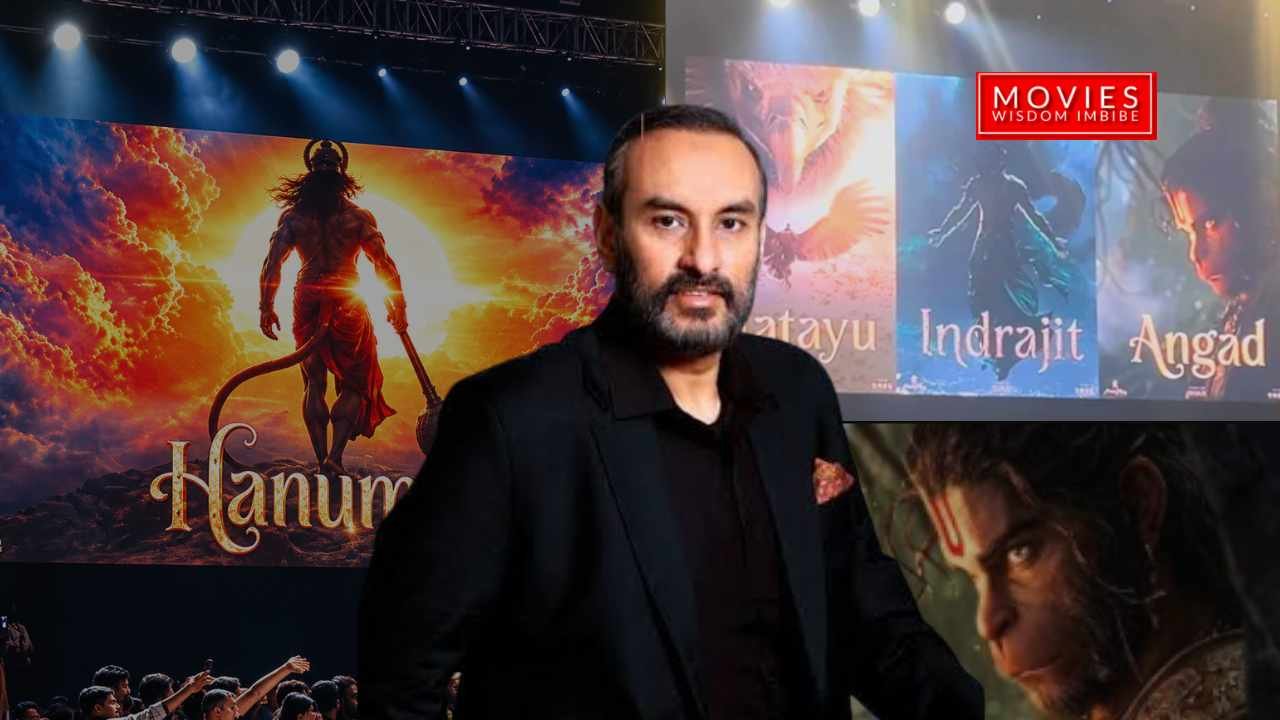
Namit Malhotra’s Bigger Plan: Building a Ramayana World
Here is the development that could make this project much more significant than a conventional two-part movie series.
Namit Malhotra has outlined an ambitious vision for a wider universe inspired by Indian mythology. According to recent reporting, the concept could extend beyond cinema into spin-off films, video games, theme parks and immersive entertainment experiences.
The goal is to make Ramayana more than a single theatrical event: it could become a lasting cultural and entertainment property with opportunities to reach audiences across generations.
1. More Stories Beyond the Main Ramayana Film
The Ramayana contains numerous characters, kingdoms, relationships and episodes that could support their own cinematic narratives.
A wider franchise could explore supporting characters and different chapters of the mythology, provided future projects are officially approved and developed.
For example, stories centred on Hanuman, Lakshman, Bharat or other figures could offer new perspectives on familiar events. These are possibilities for future storytelling, not confirmed individual spin-off films.
The challenge would be to expand the universe without losing the emotional and philosophical foundation of the original epic.
2. Video Games That Bring the Epic to Life
Video games could give audiences a more interactive way to experience the world of Ramayana.
Imagine exploring ancient kingdoms, navigating forests, discovering legendary locations or participating in missions inspired by important episodes of the epic.
A carefully designed game could introduce international players to Indian mythology through exploration, strategy and storytelling.
Gaming is one of the areas mentioned in reporting about Malhotra’s wider vision. However, specific titles, platforms and release dates should not be treated as confirmed without official announcements.
3. Theme Parks and Immersive Experiences
Perhaps the most ambitious possibility is to bring the Ramayana universe beyond screens.
Theme parks and immersive attractions could allow visitors to experience its landscapes, architecture, stories and legendary settings in a physical environment.
Such experiences could appeal to families, younger audiences, tourists and members of the Indian diaspora who want to connect with the epic in a different way.
This would also present a significant creative challenge: the experiences would need to combine entertainment with cultural sensitivity and a genuine understanding of the source material.
Theme parks are part of the broader vision reported in the media, but their locations, timelines and final formats have not been established here as confirmed details.
4. Taking Indian Mythology to a Global Audience
Malhotra’s ambitions are not limited to the Indian box office.
The project has been positioned for international audiences, with Sony Pictures handling global distribution. The makers have also promoted the film internationally, reflecting their intention to introduce this ancient Indian story to viewers who may be encountering it for the first time.
That creates an opportunity to present Indian mythology on a scale that can compete for attention in the global entertainment market.
But international success will require more than a large budget. The characters must feel emotionally understandable, the narrative must remain compelling, and the cultural context must be communicated clearly without reducing the story to spectacle.
Can Ramayana Become India’s Answer to Marvel or Star Wars?
The comparison is tempting. Hollywood has demonstrated how a successful fictional world can extend across films, television, games, merchandise and real-world attractions.
Malhotra’s reported ambitions suggest that he sees similar long-term potential in Indian mythology.
There is, however, an important difference: Ramayana is not an entirely new fictional property. It is an ancient epic with deep religious, cultural and literary significance for millions of people.
That heritage is both its greatest strength and its greatest responsibility.
A successful franchise would need to preserve the integrity of the source material while making its storytelling accessible to modern audiences. It would also need consistent creative direction, compelling future projects and sustained audience interest.
The first film’s reception will therefore be an important early test of whether the larger ambition can become a durable reality.
When Will Ramayana Release?
Ramayana: Part One is scheduled to arrive in cinemas worldwide on November 5, 2026, according to the film’s current promotional materials. The project is planned as a two-part cinematic franchise, with the second instalment intended to continue the story.
With Trailer 2 expanding the film’s promotional campaign, attention will increasingly turn towards its performances, visual effects, music and ability to connect with audiences in India and overseas.
For Namit Malhotra, the immediate goal is to deliver a compelling film. The larger ambition is to establish a platform through which Indian mythology can reach new audiences across different forms of entertainment.
Final Verdict: The Beginning of Something Much Bigger?
Ramayana Trailer 2 has renewed attention around the film’s central conflict and its ambitious cinematic scale. Ranbir Kapoor as Rama, Yash as Ravana and Sai Pallavi as Sita bring a major ensemble to a story that has endured for generations.
Yet the most intriguing question may not be how much the film earns at the box office.
It is whether Namit Malhotra can turn this adaptation into the foundation of a wider Ramayana entertainment universe — one that includes future films, interactive experiences and other projects while remaining faithful to the epic’s enduring values.
That ambition is exciting, but its success will depend on execution rather than scale alone.
If the film resonates with audiences and the wider plans develop successfully, Ramayana could become a significant milestone in the global presentation of Indian mythology.
What comes next may determine whether Ramayana is remembered as one ambitious film series or the beginning of an entire cinematic world.
Recommended for you:
- Mahakali First Glimpse: Akshaye Khanna’s Shukracharya Avatar Has Fans Asking One Big Question
- Ramayana Part 1 Trailer: When Ancient Epic Meets Modern Ambition — And Why India Needs to Forget What It Knows
Related posts:
 Ramayana Part 1 Trailer: When Ancient Epic Meets Modern Ambition — And Why India Needs to Forget What It Knows
 Drishyam 2 Review: What a Direction And Acting, Heart Steller.
 Mani Ratnam’s “Ponniyin Selvan 2” Surpasses ₹100 Crore Mark in Two Days
 Age is just a number: YRF’s ‘Vijay 69’ takes on the triathlon challenge